Physics Lab Equipments is a magnet and magnetism apparatus manufacturer in India, supplying Alnico bar magnets, cylindrical and U-shape magnets, ceramic and ball-ended magnets, plotting compasses and electromagnets to school and university physics labs, teacher-training institutes and bulk tender buyers worldwide. The range covers permanent-magnet work, electromagnet construction, magnetic-field mapping and classical magnetism demonstrations across 56 bench and demonstration units. Every magnet is shipped from our Mohra workshop pole-marked, calibrated for pull-strength, and supplied with the export paperwork bulk, government-tender and international distributor buyers need, in class-set quantities or individual units.
Products in Magnets Magnetism Physics Lab
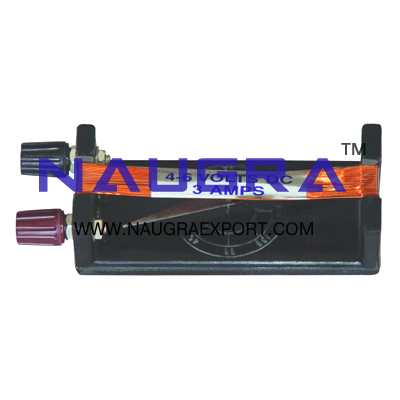
Simple Galvanoscope
Product Code: PLE-MAG-0051
Comprises wooden former with terminals & engraved metal circle marked 0 - 180 - 0, divided & figured every 45º....
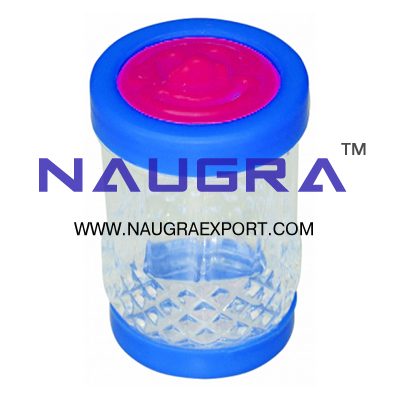
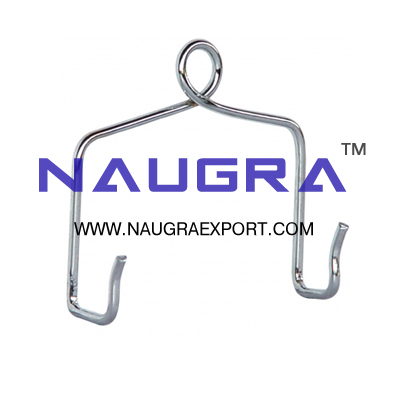
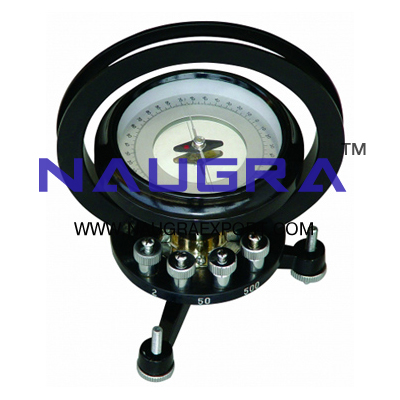
Tangent Galvanometer
Product Code: PLE-MAG-0055
A bakelite ring or bobbin is of 165 mm diameter with 3 windings of 2, 50, & 500 turns....
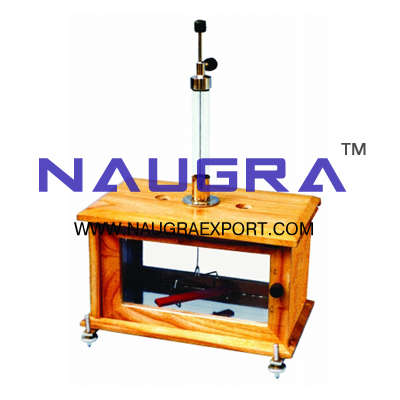
Vibration Box
Product Code: PLE-MAG-0056
To compare the magnetic moments of magnets & to determine moments of inertia etc. Consists of a polished wooden box fitted with sl...
What is magnet and magnetism lab apparatus?
Magnet and magnetism lab apparatus covers every piece needed for classical magnetic-field work at school and university level — permanent magnets in bar, cylindrical, U-shape and ball-ended forms; plotting compasses and iron-filing kits for field visualisation; electromagnets for showing how current creates magnetic fields; and demonstration dip circles for measuring the Earth's magnetic field. The range ships from Physics Lab Equipments in India with pole markings, calibrated pull-strengths and insulated handles that stand up to years of student handling.
Magnets grouped by lab use
Fifty-six bench and demonstration units cover the normal magnetism syllabus. Pick by magnet type and the experiment the lab needs to show:
| Magnet / Apparatus | Material / Type | Typical use |
|---|---|---|
| Magnet Alnico Bar | Alnico alloy, bar form | Classic field-mapping and attraction / repulsion demos |
| Magnet Alnico U Shape | Alnico alloy, U / horseshoe form | Strong local field for pickup and bridge-circuit demos |
| Electromagnet | Wound iron core, variable current | Current-to-field relationship, lifting experiments |
| Plotting Compass | Jewelled pivot, pointer needle | Field-line mapping, direction-finding exercises |
How to choose magnets for a school lab
Which magnet material for which year group?
For primary and middle-school magnetism (attraction / repulsion, which materials are magnetic), ceramic (Magnet Bar Ceramic) and Alnico bar magnets are robust, inexpensive and safe. For secondary and higher-secondary quantitative work (field strength, pole-to-pole pull), Alnico with its higher coercivity gives repeatable readings. For demonstration-only lecture work (lifting iron weights, dramatic attraction), U-shape and ball-ended Alnico magnets give the strongest local field.
Rare-earth magnets — handle with care
Our range deliberately does not stock neodymium or other rare-earth student-grade magnets. The forces involved make them unsafe in a classroom — fingers get pinched, screens shatter, pacemakers and other medical devices are affected within tens of centimetres. For demonstration use where a rare-earth magnet is essential, we quote them separately as a specialist line with the required safety documentation.
Plotting compass or iron filings for field mapping?
Plotting compasses give a cleaner result and let the student record the field direction as a small arrow on paper — the preferred method for undergraduate practicals. Iron filings give the dramatic whole-field image for a classroom demonstration but need a replacement sheet of paper and care in disposal. We stock both.
Specifications to confirm at the quotation stage
| Apparatus | Key specification | What to confirm at enquiry |
|---|---|---|
| Alnico bar magnet | Length, pole pull-strength | Bar length (75 mm, 100 mm, 150 mm) and remanence grade |
| Electromagnet | Operating voltage, turns per coil | Supply voltage (6 V, 12 V DC) and continuous-duty rating |
| Plotting compass | Needle length, pivot type | Needle length (25 mm, 40 mm) and jewelled vs steel pivot |
Where magnets sit in the physics lab
- Primary school magnetism bench: ceramic bar magnets and plotting compasses for the "what sticks to what" and field-direction practicals.
- Secondary school main bench: Alnico bar magnets, U-shape magnets and plotting compasses for quantitative field-mapping work.
- Higher-secondary physics lab: add electromagnets, field-induction coils and ball-ended magnets for electromagnetic induction practicals.
- Undergraduate practical: full magnetism bench with dip circles, calibrated bar magnets, deflection magnetometers.
- Linked lab benches: pair with Electrostatic Physics and Electricity Experiments to cover the full electromagnetism syllabus; and with Physics Magnet Science Lab for complete student kits.
Who buys this range
| Buyer | What they typically need |
|---|---|
| Primary school science lab | Ceramic bar magnets, plotting compasses in class-set quantities of 15–30 |
| Secondary school physics lab | Mix of Alnico bar, U-shape and cylindrical magnets, 10–20 of each per lab |
| Higher-secondary / A-level lab | Electromagnets, dip circles and precision bar magnets |
| Ministry of Education physics tender | Mix of ceramic class-set magnets and Alnico demonstration units across school tiers |
| NGO school-setup programme | Ceramic bar magnets and plotting compasses packed in class-set crates |
| Teacher-training institute | One of every magnet type so trainees see the full magnetism range |
Quality notes on magnet manufacturing
Alnico magnets are cast and then precision-ground at our workshop, poles identified in red (north) and blue (south) by convention. Every bar magnet is pull-tested against a calibrated keeper before leaving packing, and the pull-strength recorded on the batch certificate; this matters for schools running quantitative pull-force practicals where reproducible results are essential. Ceramic magnets are checked for edge chips (the most common consumer complaint) and packed with a soft inner liner to prevent in-transit damage.
Keepers — the soft-iron pieces that sit across the poles when the magnet is stored — are supplied with every bar and U-shape Alnico magnet. Storing Alnico magnets without keepers is the single largest cause of avoidable weakening in school magnets, and this one practice extends magnet life by years.
Shipping, packing and tender documentation
Magnets ship individually boxed with keepers in place; class sets are packed in nested cartons with magnetic separation sheets between units to prevent them re-magnetising each other to the wrong polarity. For air freight, magnets are labelled per IATA packing instruction 953 and the magnetic-field survey is included in the shipping documents. For school-tender quantities of 20+ class sets per destination, we attach the tender's required paperwork — conformity certificates, country-of-origin documents, invoice and packing list in the destination customs authority format. Spare keepers and replacement plotting-compass needles are quoted as a separate line.
Frequently asked questions
How do I store school magnets so they stay strong?
Store Alnico bar magnets with their soft-iron keepers across the poles; store U-shape magnets with the keeper bridging the two poles. Keep sets in pairs with opposite poles facing. This simple habit keeps magnets at factory pull-strength for the life of the apparatus.
Are these magnets safe for use by primary school children?
The ceramic and small Alnico bar magnets in this range are safe for supervised primary-school use. The U-shape and ball-ended Alnico magnets are strong enough to pinch fingers if they snap together carelessly, and should be introduced only from middle school onwards. Rare-earth magnets are not included in this range precisely because they are unsafe for classroom use.
Do magnets lose strength over time?
Alnico magnets stored correctly with keepers lose almost no measurable strength over a decade of normal school use. The two things that weaken them: heat above 500°C (never a classroom issue) and being allowed to repel another magnet forcibly with no keeper in place. Ceramic magnets are more robust against heat but brittle — the main failure mode is chipping, not demagnetisation.
Can I use these magnets in experiments on Earth's magnetic field?
Yes — the plotting compasses and deflection magnetometers in this range are calibrated for the standard magnetism syllabus, including dip and declination measurements. For precise geomagnetic survey work (not school physics), see our separate geophysical instrumentation range.
Can you supply in bulk for a Ministry of Education tender?
Yes. We respond to tender BOQs line by line against the published specification. Attach the bidding document when you contact our tender desk and we will return a priced, spec-matched quotation within 48 working hours.
What's the warranty on the electromagnets?
12 months against manufacturing defects on the coil, core and terminal block. Continuous-duty rating on the labels — exceed it and the coil may burn out, which is not a warranty case. Replacement coils are stocked and quoted as needed.
Request a quote for magnets and magnetism apparatus for Bulk or Tender Supply
Tell us how many units, which type (Alnico bar, U-shape, ceramic, plotting compasses, electromagnets), the destination country and the tender BOQ if applicable. Quotes return within 24 working hours; tender BOQ reviews within 48.
Request a Quote Tender Desk