Physics Lab Equipments is a cell and battery lab apparatus manufacturer in India, supplying Daniel cells, Leclanche cells, simple cells, lead accumulators, battery jars, porous pots, carbon rods, zinc and copper electrodes and the full range of classical electrochemistry demonstration apparatus to secondary schools, universities and bulk tender buyers worldwide. The range covers primary-cell chemistry, secondary-cell (rechargeable) demonstration, EMF comparison and classical electrolysis across 14 bench and demonstration units. Every apparatus ships from our Mohra workshop with correctly-labelled electrodes, acid-resistant containers and the export paperwork bulk, government-tender and international distributor buyers need.
Products in Cell Battery Lab Experiments

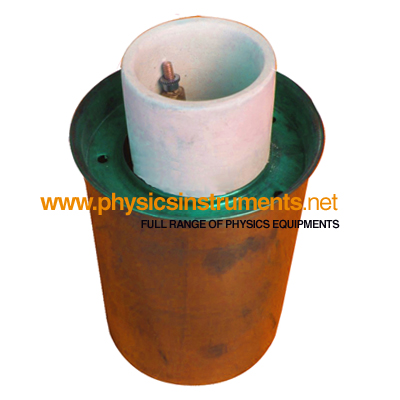
Daniel Cell
Product Code: PLE-CBT-0002
Comprising a heavy-gauge copper outer vessel with an internal perforated shelf for copper sulphate crystals, a porous pot and an a...

Lechlanche Pot Polyethylene
Product Code: PLE-CBT-0003
Lechlanche Pot Polyethylene Jar, Made of High density plastic...
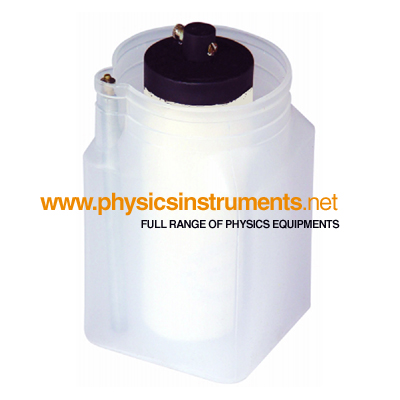
Leclanche Cell
Product Code: PLE-CBT-0004
Leclanche Cell Charged porous pot 150 x 60 mm height x diameter...


Cell Plates with Terminal
Product Code: PLE-CBT-0006
Cell - Plates, With Terminal: Each plate is 125 x 10 cm length x dia...

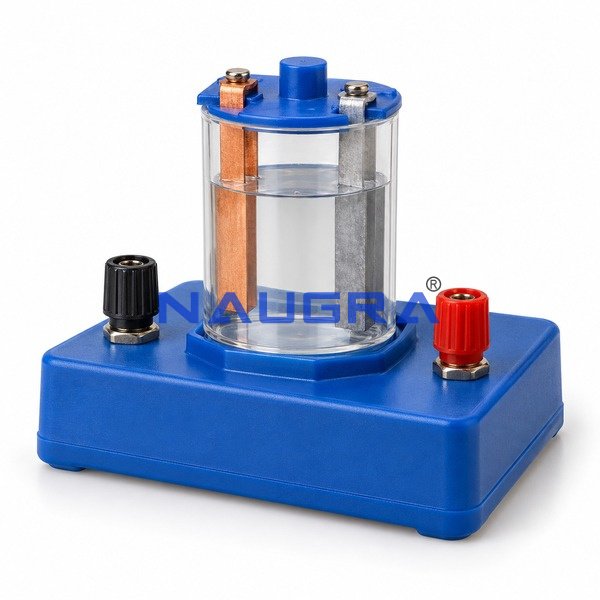
Cell – Standard
Product Code: PLE-CBT-0014
'H' form constructed, Platinum wires are sealed into the bases of the limbs & are connected to the terminal at the top of the case...
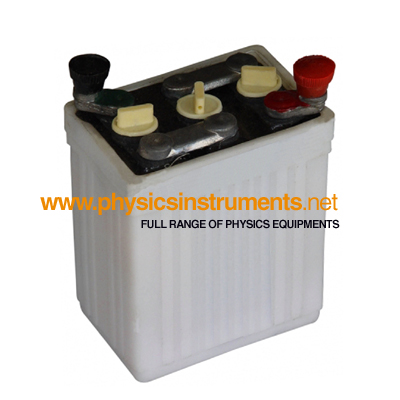
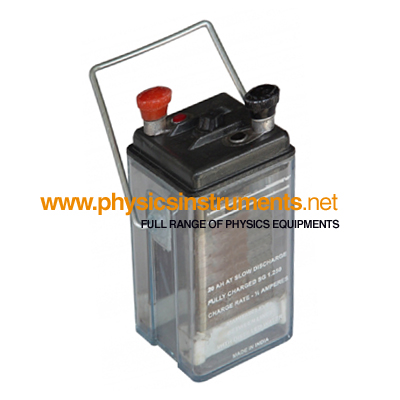
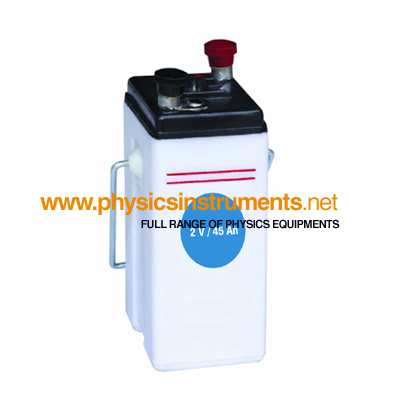
Lead Accumulator Storage Type 45Ah
Product Code: PLE-CBT-0010
Lead Accumulator Storage Type 2V/45Ah...


What is cell and battery lab apparatus?
Cell and battery lab apparatus is the equipment for demonstrating how chemical reactions produce electricity — the classical primary and secondary cells that physics and chemistry syllabi still teach because they make the electrochemistry visible. Daniel cells for the two-electrolyte-with-porous-pot architecture, Leclanche cells for the ancestor of the dry cell, simple cells for first-principles zinc-copper demonstration, and lead accumulators for the classical secondary-cell (rechargeable) story. The range ships from Physics Lab Equipments in India with acid-resistant glass or polyethylene containers and electrodes labelled with their material and polarity.
Cells grouped by cell chemistry
Fourteen bench and demonstration units cover the normal cell and battery syllabus. Pick by the cell type the lab needs to teach:
| Cell / Apparatus | Cell chemistry | Typical lab use |
|---|---|---|
| Simple Cell | Zinc-copper in dilute acid | First-principles EMF demonstration |
| Daniel Cell | Zn / ZnSO4 || CuSO4 / Cu with porous pot | Primary cell with constant EMF (~1.1 V) |
| Leclanche Cell | Zn / NH4Cl / MnO2 (carbon rod) | Primary cell, direct precursor to dry cell |
| Lead Accumulator Plate Type | Pb / PbO2 in dilute H2SO4 | Secondary (rechargeable) cell demonstration |
How to choose cell apparatus for a lab
Primary or secondary cells for the syllabus?
For first-principles physics-and-chemistry teaching of how cells work, primary cells (Daniel, Leclanche, simple) are the starting point — the student assembles the cell, measures the EMF, understands that a chemical reaction is driving current. For the rechargeability story — "you can reverse the chemistry with an external voltage and store electrical energy" — you need a lead accumulator. Most school labs stock both; the Daniel and Leclanche for primary-cell theory, the lead accumulator for the secondary-cell demonstration.
Porous pot or no porous pot?
The Daniel cell is defined by its two-electrolyte architecture separated by a porous pot. We supply Daniel cell apparatus with the porous pot by default. The Lechlanche Pot Polyethylene is the modern unbreakable equivalent of the original glazed earthenware pot used in Leclanche cells; many school tenders now specify polyethylene over porous earthenware for the simple reason that polyethylene survives a storeroom drop.
Electrode materials — supplied with every cell?
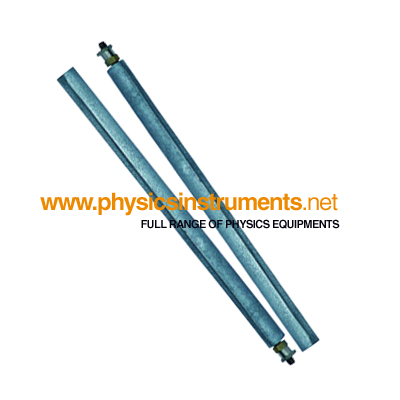
Daniel, Leclanche and simple cells all ship with the correct electrodes (zinc and copper for Daniel and simple, zinc and carbon rod for Leclanche). Spares are supplied as lead plates, plates with terminal, zinc plates, copper plates and extra carbon rods as separate lines.
Specifications to confirm at the quotation stage
| Apparatus | Key specification | What to confirm at enquiry |
|---|---|---|
| Daniel cell | Jar capacity, porous pot type | Supplied porous pot (earthenware or polyethylene) |
| Lead accumulator | Plate capacity, electrolyte volume | Plate type (plate or storage) and acid supplied separately |
| Battery jar | Volume, acid resistance | Glass or polyethylene and standard capacity |
Where cells and batteries sit in the physics lab
- Secondary school electrochemistry bench: simple cells for first-principles EMF demonstration, Daniel cells for the primary-cell introduction.
- Higher-secondary physics / chemistry lab: add Leclanche cells and lead accumulators for the primary-vs-secondary cell comparison and capacity measurement.
- Undergraduate practical: precision EMF measurement with a potentiometer against a standard cell, storage-battery characterisation with the storage-type lead accumulator.
- Science-fair or exhibit use: fully-assembled Daniel and Leclanche cells with labelled components for public-facing electrochemistry demonstrations.
- Related benches alongside: pair with Electricity Experiments (galvanometers, resistance boxes) for complete EMF-measurement practicals.
Who buys this range
| Buyer | What they typically need |
|---|---|
| Secondary school physics / chemistry lab | Simple and Daniel cell kits in class-set quantities of 10–15 |
| Higher-secondary / A-level lab | Daniel and Leclanche cells plus one lead accumulator per lab |
| University undergraduate lab | Full primary and secondary cell range plus potentiometer EMF kit |
| Chemistry teacher-training programme | One of every cell type across the primary and secondary families |
| Science museum or exhibit | Assembled Daniel and Leclanche cells with transparent jars for visibility |
| Ministry of Education physics tender | Mix of class-set simple and Daniel cells across school tiers |
Quality notes on cell apparatus
Electrochemistry apparatus lives or dies on electrode cleanliness and container integrity. Zinc electrodes are rolled from 99.9%+ zinc sheet (impurities cause local corrosion and unreliable EMF); copper electrodes are rolled from pure electrolytic copper. Each electrode is labelled with its material to prevent the common storage-room mix-up where a Daniel cell's copper plate ends up in a Leclanche cell apparatus. Carbon rods are machined graphite; we check each rod for cracks, since a cracked carbon rod fails open-circuit the moment acid penetrates.
Containers — battery jars, porous pots — are selected for acid resistance. The modern polyethylene versions give unbreakable service at the cost of some visibility compared to the classical glass or earthenware. We default to polyethylene for tender supply unless the enquiry specifies otherwise, because breakage during shipping and storage is the single largest avoidable cost on this product family.
Shipping, packing and tender documentation
Cells ship dry — without electrolyte — in individual boxes with separately-labelled electrodes, porous pots and jars. Electrolyte (sulphuric acid, zinc sulphate, copper sulphate, ammonium chloride) is a separate line and is often sourced locally by the destination lab for safety reasons; we supply it on request with the matching hazard documentation. Battery jars and glass containers are double-boxed with corrugated dividers. For school-tender quantities of 20+ class sets per destination, we pack in master cartons sized for pallet consolidation and attach the tender's required paperwork — conformity certificates, country-of-origin documents, invoice and packing list in the destination customs authority format. Spare electrodes, replacement porous pots and spare carbon rods are quoted as a separate line item on request.
Frequently asked questions
Do the cells ship with electrolyte or does the school supply it?
Cells ship dry. The dilute sulphuric acid, zinc sulphate, copper sulphate and ammonium chloride electrolytes used in these cells are classified hazardous goods for international shipping and most tenders prefer locally-sourced electrolyte for exactly that reason. We supply the electrolyte as a separate line with hazard documentation on request, or the destination lab sources it from a local chemical supplier.
Why does the Daniel cell need a porous pot?
The Daniel cell has two different electrolytes — zinc sulphate at the zinc electrode, copper sulphate at the copper electrode. The porous pot keeps them separate (no mixing by diffusion or stirring) while letting ions cross to complete the circuit. Without the pot, the two solutions would mix and the cell chemistry would be the same as a messy simple cell. Showing the porous pot is central to teaching the Daniel cell architecture.
Can the lead accumulator be recharged by students?
Only under direct teacher supervision with appropriate PPE. A plate-type lead accumulator can be charged from a 2 V DC supply with current-limiting — the demonstration apparatus is designed for this. It involves sulphuric acid and electrochemical gas evolution; follow the lab safety protocol for acid handling and run the charge in a well-ventilated area or a fume hood.
How long do these cells last once assembled?
Running continuously, a Daniel or Leclanche cell gives useful demonstration current for several hours before the electrolyte is depleted. For storage between classes, drain the electrolyte, rinse the electrodes in clean water and dry them — the dry cell assembly then stores indefinitely. This is a decade or more of teaching use from a single cell kit.
Can you supply in bulk for a Ministry of Education tender?
Yes. We respond to tender BOQs line by line against the published specification. Attach the bidding document when you contact our tender desk and we will return a priced, spec-matched quotation within 48 working hours.
What spare parts should the lab keep in stock?
Spare zinc plates (the fastest-consumed electrode), one spare porous pot per Daniel-cell kit, spare carbon rods for the Leclanche cells and a spare glass or polyethylene battery jar per 10 units. For the lead accumulator, spare lead plates and one spare storage jar.
Request a quote for cell and battery lab apparatus for Bulk or Tender Supply
Tell us how many units, which cells (simple, Daniel, Leclanche, lead accumulator), electrolyte requirements, the destination country and the tender BOQ if applicable. Quotes return within 24 working hours; tender BOQ reviews within 48.
Request a Quote Tender Desk